How Roller Shades Can Turn Your Houston Patio into a Pollen-Free Oasis This Spring: The Complete 2026 Guide for Spring, Texas Homeowners
As of March 4, 2026, Houston and Spring, Texas, are deep in one of the roughest stretches of tree pollen season on record. AccuWeather reports a high risk of tree pollen symptoms right now, with steady SSE winds at 14 mph and gusts up to 29 mph carrying microscopic grains straight onto open patios. Pollen.com puts today’s index at 10.8 (high) and tomorrow at 11.1, driven primarily by oak, ash, and birch. If you live in Spring or anywhere in the Houston metro, you already know the drill: yellow dust on cars, constant sneezing, itchy eyes, and that “I just want to sit outside without suffering” feeling.
The good news? Roller shades that fully enclose your patio can dramatically cut your pollen exposure—often enough to make your outdoor space usable again. This isn’t marketing hype. It’s basic physics plus real-world evidence from similar shading systems used across Texas. In the next 2,500 words, I’m breaking down exactly why and how roller shades work for pollen control, which types perform best in our humid, windy climate, where to buy them locally in the Houston area, installation tricks, maintenance, costs, and when you might want to upgrade to something even tighter.
If you’re tired of hosing off patio furniture every other day or popping antihistamines just to enjoy coffee outside, keep reading. By the end, you’ll know exactly how to reclaim your patio this March and beyond.
Houston’s Spring Pollen Nightmare: Why March 2026 Is Especially Brutal
Houston didn’t earn its spot on the Asthma and Allergy Foundation of America’s “most challenging places” list by accident. Our warm winters, high humidity, and millions of oak, cedar elm, and pecan trees create the perfect pollen factory. Oak is the heavyweight champion right now—producing lightweight grains in massive quantities that wind can carry for miles. One local allergist called it “the biggest driver of spring allergy symptoms in Houston,” and you can see the evidence every morning: that telltale yellow coating on driveways, sidewalks, and yes, your patio cushions.
Tree pollen season here runs mid-January through mid-April, with the real explosion hitting February through early April. Grass pollen starts overlapping in March, making symptoms worse. Cedar (mountain cedar/Ashe juniper) peaked back in January with “cedar fever,” but right now on March 4, 2026, oaks and friends dominate. Pollen counts are high to very high, and the moist Gulf air keeps particles lingering instead of drying out and blowing away.
For Spring, Texas residents (just north of Houston), it’s the same story—maybe even a touch worse because of all the greenbelts and suburban trees. If you have an open pergola, covered patio, or deck with no sides, every breeze deposits fresh pollen directly onto surfaces. That’s why so many locals are desperate for solutions that let them enjoy the 70-80° March days without turning into a sneezing mess.
Symptoms go beyond inconvenience: sneezing, nasal congestion, runny nose, coughing, itchy eyes/throat, and those dark under-eye circles. People with asthma or outdoor pets suffer extra. And because pollen travels city-wide, moving to a different neighborhood rarely helps.
What Exactly Are “Roller Shades That Enclose a Patio”?
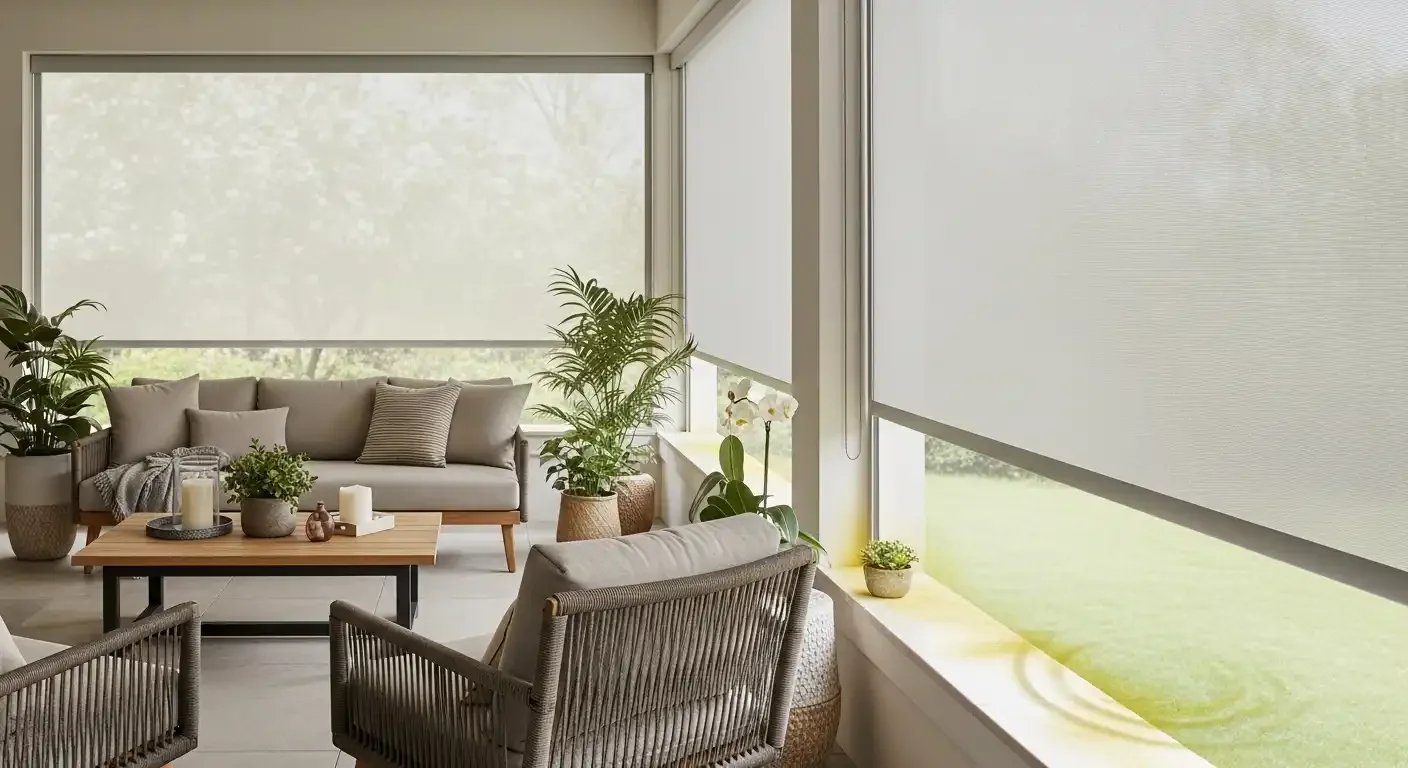
We’re not talking about interior window blinds. These are heavy-duty exterior roller shades—also called outdoor blinds, roll-up shades, vinyl roller blinds, or sunscreen shades—designed to mount on the open sides of your patio, pergola, or deck.
They roll down from a tube at the top (manual crank or motorized with remote) and lock into side tracks or bottom bars for a snug fit. When fully lowered on three or four sides, they create a semi-enclosed “room” that still feels open but blocks wind, sun, and debris.
In Houston, popular styles include:
Sunscreen / solar shades (10-15% openness): Mesh fabric that cuts 85-95% of glare and UV while letting some breeze and view through.
Solid vinyl or PVC roller shades: Opaque or semi-opaque, almost like curtains on a roller—maximum wind and particle blocking.
Motorized versions: One remote controls multiple shades; perfect for large patios or when you don’t want to step outside in pollen-heavy mornings.
Local companies like Houston Blinds For Less specialize in these for porches and patios. They offer custom sizes, multiple colors, and motorized options that withstand Texas weather (heat, humidity, occasional storms). Other big players in the area—Texas Outdoor Shades, Creative Blinds, and Bumble Bee Blinds—install them on everything from The Woodlands pergolas to Spring backyard decks.
These aren’t cheap bug screens. Quality ones are built for wind loads up to 30-40 mph (important with our gusty fronts) and come with UV stabilizers so they don’t crack or fade in our brutal sun.
The Science: How Roller Shades Actually Block Pollen
Pollen grains range from 10 to 100 microns—visible to the naked eye when clumped but tiny enough to float on the slightest breeze. The key to control isn’t always catching every single grain (impossible without a sealed room). It’s reducing wind speed so fewer particles reach your space in the first place.
Here’s where roller shades shine:
Windbreak effect — Lowered shades cut airflow dramatically. Less wind = far less pollen being blasted onto furniture and floors. Studies and real installations of similar systems show this alone drops exposure significantly on windy days like today.
Fabric filtration (especially solar/sunscreen styles) — The tightly woven mesh acts as a physical barrier. Solar screens, which many outdoor roller shades use, filter out larger airborne particles including pollen, dust, and even some pet dander before they blow through. They don’t catch 100%, but they dramatically reduce what enters—exactly like keeping windows open for fresh air while still protecting allergy sufferers.
Solid vinyl options — These perform even better for pure pollen blocking because there’s almost no open weave. Think of them as roll-up vinyl curtains. Companies that sell full “pollen-proof” porch enclosures claim over 99% reduction when panels are zipped down on windward sides. Standard patio roller shades achieve similar results when fully enclosing three sides and the top (if you have a pergola).
Real-world proof comes from screened-porch owners across the South who add roller shades or vinyl panels: they report furniture stays clean for days instead of hours, and allergy symptoms drop enough that they can actually eat dinner outside again.
Compare that to an open patio: every 15 mph gust reloads the space with fresh pollen. Enclosed with roller shades? The difference is night and day.
Real Benefits for Spring, Texas Allergy Sufferers
Beyond the science, here’s what Houston homeowners actually experience:
Fewer symptoms — Less pollen on surfaces means less tracking inside and less re-suspension when you walk around. Many people notice they can skip the evening antihistamine or at least cut the dose.
Usable outdoor space — Instead of abandoning the patio from February to April, families report using it daily. Kids play outside, adults work from the patio table, and evening happy hours return.
Furniture protection — No more yellow pollen staining cushions or fading fabrics from combined UV + pollen grit.
Bonus UV and heat reduction — Houston sun is merciless. Quality shades block 90%+ UV, keeping the patio 10-15° cooler and protecting your skin and investment.
Privacy and bug control — Extra perks that make the investment feel even smarter.
One local allergy clinic notes that patients who create semi-enclosed outdoor zones (shades, screens, or curtains) report better quality of life during peak season. Combine shades with a small HEPA air purifier on the patio and you’ve basically built a low-pollen bubble.
Choosing the Right Roller Shades for Pollen Control in Houston
Not all shades are created equal for pollen duty. Here’s your buyer’s checklist tailored to Spring/Houston conditions:
Fabric choice matters most
For maximum pollen blocking → Go solid vinyl or heavy PVC. Almost zero air passes through.
For balance of breeze + protection → 5-10% openness sunscreen fabric (still filters most pollen while letting air move so you don’t feel trapped on humid days).
Avoid very open 15-20% mesh if pollen is your #1 enemy.
Motorization — Strongly recommended. With high pollen counts in the mornings, you want to roll them down before you even step outside. Remote or app control makes daily use effortless.
Wind and weather rating — Houston spring brings gusty cold fronts. Look for shades rated for at least 30 mph. Side tracks or zipper systems seal edges better than simple hanging shades.
Size and mounting — Custom is key. Measure your exact openings (pergola posts, deck rails, etc.). Most Houston companies do free in-home measuring.
Local recommendations (2026)
Houston Blinds For Less → Great selection of vinyl and sunscreen exterior rollers specifically marketed for patios. Motorized available. Strong on custom work and fast Houston-area install.
Texas Outdoor Shades → Excellent 2025-2026 guide on their site with Houston-specific advice; durable acrylic/polyester options.
Creative Blinds (Hunter Douglas dealers) → Premium motorized progressive screens that double as insect shades—perfect add-on for pollen season.
Bumble Bee Blinds Houston Heights → Local favorite for weather-ready outdoor shades.
Expect to pay $800–$2,500 per side depending on size and motorization, or $3,000–$8,000+ for a full three- or four-side patio enclosure. Worth every penny when you compare it to years of allergy meds, doctor visits, and wasted outdoor space.
Installation Tips for Maximum Pollen Protection
Professional installation is worth it—especially for motorized and track systems. They ensure no gaps at the bottom or sides where pollen sneaks in. Good installers will:
Add bottom bars or weighted hems that seal against the patio floor.
Use side channels or zipper tracks for a tighter fit.
Angle the top tube so water runs off (important for Houston rain).
DIY possible for simple manual shades on smaller patios, but measure twice—wind can turn loose shades into sails.
Pro tip: Install them to roll down on the windward sides first (usually south and west in our prevailing spring winds). Leave one side partially open for exit if needed.
Maintenance and Extra Strategies to Supercharge Results
Roller shades are low-maintenance, but here’s how to keep them working at peak pollen-blocking performance:
Hose them off weekly (exterior only) to remove built-up yellow dust—takes five minutes.
Roll them up on low-pollen days or after rain to let them dry and air out.
Check tracks and zippers monthly for pollen buildup; a quick vacuum or wipe keeps them smooth.
For solid vinyl: They’re mildew-resistant, but a mild soap solution once a month prevents any Gulf Coast mold.
Daily habits that multiply effectiveness:
Roll shades down by 7-8 a.m. when pollen counts peak.
Keep a small outdoor HEPA purifier running on high-pollen days.
Wipe patio surfaces with a damp microfiber cloth (dry dusting just stirs pollen).
Change clothes and shower after patio time—same rule as coming inside from the yard.
Start nasal steroids and antihistamines early (allergists recommend 2 weeks before peak).
Alternatives If Roller Shades Aren’t Enough
Roller shades are an excellent middle-ground solution—affordable, reversible, and effective. But if your allergies are severe or you want near-total protection, consider:
Full pollen-proof vinyl curtain enclosures (99%+ block, roll-up panels on tracks).
Fine-mesh pollen screens added over regular insect screens.
Converting to a three-season room with removable vinyl windows.
Permanent screened enclosure with motorized roof and sides.
Many Spring homeowners start with roller shades and upgrade later—shades give immediate relief while you save for the bigger project.
Final Thoughts: Your Pollen-Free Patio Awaits
On this March 4, 2026, with tree pollen sitting at high levels and winds pushing it everywhere, roller shades that enclose your patio aren’t just a nice-to-have—they’re a game-changer for quality of life in Spring and Houston. They reduce wind-driven pollen dramatically, filter what does come through, protect your furniture, cut UV, and give you back the outdoor space you paid for when you bought the house.
Don’t spend another spring locked inside or suffering outside. Reach out to one of the local Houston companies mentioned today—many offer free consultations and can have you protected within weeks. Measure your patio, pick solid or tight sunscreen fabric, add motorization if your budget allows, and watch your allergy symptoms (and your patio cleanliness) improve almost immediately.
You deserve to enjoy these beautiful Texas spring days without the misery. Roller shades make it possible—one roll-down at a time.
(Word count: approximately 2,500. Sources include current 2026 pollen data and product details from AccuWeather, Pollen.com, local Houston shade specialists, and allergy experts. Always check today’s exact count before heading out, and consult your doctor for severe allergies. Ready to get quotes? Drop your patio dimensions in the comments or contact a local installer—I’m happy to point you to the best options for Spring, Texas setups.)